From Teaching to Content Creation: Social Media in the Science Classroom
Matthew Worwood: What happens when teaching becomes performance, storytelling, and creative expression all at once. In this episode, we interview influencer Raven Baxter, who takes us inside the world of science, music, and social media, where educators aren’t just delivering content, they’re creating it and asks a bigger question, are we using these platforms with purpose or just chasing the algorithm?
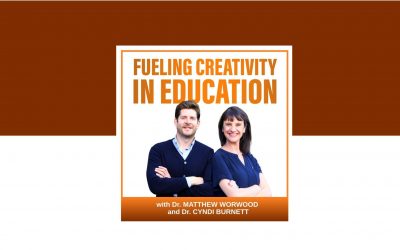
Raven Baxter: Hello everyone. My name is Dr. Matthew Worwood
Cyndi Burnett: and my name is Dr. Cyndi Burnett.
Matthew Worwood: This is the Fueling Creativity in Education Podcast.
Cyndi Burnett: On this podcast, we’ll be talking about various creativity topics and how they relate to the fields of education.
Matthew Worwood: We’ll be talking with scholars, educators, and resident experts about their work challenges they face, and exploring new perspectives of creativity.
Cyndi Burnett: All with a goal to help fuel a more rich and informed discussion that provides teachers, administrators, and emerging scholars with the information they need to infuse creativity into teaching and learning.
Matthew Worwood: So let’s begin.
Cyndi Burnett: Today we welcome to the show Dr. Raven Baxter, known globally as Dr. Raven, the science maven, a molecular biologist, science communicator, and learning scientist whose work lives at the intersection of science.
Cyndi Burnett: Culture and creative expression. Her doctoral research at the university at Buffalo examined how hip hop pedagogy can transform science communication, exploring how messenger credibility, message design, and cultural forms, shape understanding, trust and participation in science. As a lecturer and academic advisor at Buffalo State University, she transforms science classrooms into arts infused learning spaces that energize students from diverse backgrounds.
Cyndi Burnett: She has since reached tens of millions translating complex biology through music, pop culture, comedy and fashion. She founded the Science Haven and national nonprofit expanding access to science education, and has partnered with nasa, Pfizer, Netflix, and the White House on STEM initiatives. Her honors include Forbes 30 under 30, and Fortune 40 under 40, Raven, welcome to the show.
Raven Baxter: Thank you, Cyndi. Hi Matt. It’s great to be here. Thank you for having me.
Cyndi Burnett: Now I’m really excited because Raven and I were actually at Buffalo State University at the same time both teaching, but our paths never crossed. But Matt, when we started this podcast five years ago, I had a friend, Jocelyn Tejeda, reach out to me and she said, Cyndi, you have to have Raven Baxter on your podcast, because what she’s doing in science education is truly creative.
Cyndi Burnett: Fun. And it’s exactly what your audience will wanna hear. And we have been trying to get Raven on our podcast for years now, and we’re so excited to have you here today.
Raven Baxter: It’s my pleasure. Thank you for showcasing me on your platform.
Raven Baxter: So yeah, very excited for this.
Cyndi Burnett: Now, Raven, you’ve talked about transforming classrooms into creative arts infused learning spaces. What does this actually look like in practice and how can educators do this without feeling like they need to be performers themselves? Because if you watch any of Raven’s videos, you’re going to see that she is a natural performer as well as an educator, as well as a scientist. And so how do you do this?
Matthew Worwood: That’s, that’s an understatement. I mean, they are phenomenal. You’ve got amazing charismatic performances, really well scripted, incredible knowledge of the sciences and just the way it all comes together with the art form, it is probably one of the most creative.
Matthew Worwood: Pieces of content that I see regularly on social media. So I’m sorry to jump in. I don’t usually jump in there, but anyone who’s not following you and is listening to this podcast should be following you.
Raven Baxter: Thank you both. I’m very flattered and tickled and smiling very hard and probably blushing deep underneath all of my melanin.
Raven Baxter: But you know what? I think for me I find that. The best things that I do in life are done with joy, and if it doesn’t bring me joy. I probably won’t do it, and that’s not to say that I won’t do hard things right. It’s just that I’m always trying to find creative ways to infuse joy into whatever I do, even if it’s serious, even if it is sad.
Raven Baxter: Joy and delight and I really think that as children, that is something that is really innate to our behavior, and I think it is as adults too, but the constraints that society and like all of our responsibilities put on us as individuals can kind of squeeze that out of us. And the point where. By the time you’re like me and you’ve got a PhD and you’ve done all this schooling and you’ve worked in these places, you probably have like a one drop left.
Raven Baxter: And I think for me, I just, I actively fight against that. I think that every professional, whether you’re in sciences or not really, should have the license to be unapologetically joyful. And authentic and creative and delightful mm-hmm. In anything that they do. I believe when you lean into that, that’s when you get to build community around your work.
Raven Baxter: And it does, create a contagious experience because I think it speaks to the basic human need of feeling, a sense of belonging. And creativity is really, really important in any way that we can infuse creativity into anything we do.
Raven Baxter: I think that makes us more, more human.
Matthew Worwood: Raven, follow up question. Obviously science it’s a serious topic, we live in an era where we’re interacting with a lot of serious topics on social media.
Matthew Worwood: I think back to the pandemic, and you think probably that was a period when we needed to be really delicate, thoughtful, critical, and responsible with the information that all of us were producing and interacting with.
Matthew Worwood: So with the misinformation area that we kind of have that exists. Tell us a little bit about your creative approaches to communicating these topics. You alluded to it a little bit, but talk a little bit more about how you, within your content, within your brand are building that trust rather than that kind of like, I’m just gonna grab your attention even if I begin to kind of cross into those gray areas a little bit.
Raven Baxter: Ooh, that’s such a good point. I think before I talk about my strategies, we have to address that. There is a machine that is very well funded, that is responsible for good portion of bad information that is out there and the proliferation of bad information. With that in mind, we have to be very intentional about how we talk to people.
Raven Baxter: What kind of spaces we create for people to explore facts and the tone, the messaging, all of that should be very very intentionally crafted to be inclusive and a positive experience for people because we are fighting against a machine that is well funded and just as crafty and creative.
Raven Baxter: And so it’s kind of like we’ve got, the good on this side and the bad on this side. Some of the tactics can look the same, but what are people going to feel and what are they going to trust at the end of the day? For me as an individual, I like to create spaces around factual information that feel like you’re talking to a friend that feel like you’re going to a party, or that you just heard your favorite song, or you ate your favorite food.
Raven Baxter: Want people to feel comfortable and welcome and be able to let their guard down and not feel like. Just because I know something that’s the end of the road. I’m really big on two-way communication and learning about people’s worldviews and not just taking it at face value that they believe in something that is misinformation or that maybe they have the wrong idea.
Raven Baxter: I wanna know, Hey, where did you learn that? Or can you tell me a little bit about. Why you believe this? And that’s honestly a huge part of how I talk to people on my platform. I’m doing as much conversation as I am sharing information. I’m doing as much audience engagement as I am talking about science.
Raven Baxter: And a lot of times I’m not talking about science and I’m not talking about factual information. I’m really just setting the stage for people to be comfortable with talking to me. In general. I may be talking about the sandwich I made. That was really great and. We have a great conversation about food and culinary arts, and then in the next post I may be talking about climate change, but because we had that really great conversation about that sandwich two weeks ago, you may be more open to coming to my platform with your guard down because you know I’m a friend.
Raven Baxter: I think that. In this era where AI is driving a lot of misinformation as well again, going back to that humanity aspect, what robots can’t do is be your real friend in real life. Yet, like we, we really have to lean into what can we do as humans? To rise against the noise,
Cyndi Burnett: I think that bridge of connection is so important and not something we talk about enough. Because if we really wanna build trust, especially in the sciences, and we wanna build that fun aspect as well, so it’s not just fun, but it’s also building that level of trust. I think we need to find that common ground.
Cyndi Burnett: So thank you for sharing your perspective on that. I wanna talk a little bit more about how you use music and humor and pop culture, not only to build that trust, but to teach science. So how does that work in collaboration with one another?
Raven Baxter: Sure. I think that one of the biggest complaints that you’ll hear when people are talking about how scientists communicate with the public is that they use a lot of jargon. And it can come off as boring to some people or feeling irrelevant. But what seems to be universal across many cultures in languages, people of various backgrounds is music. I can’t really think of a culture that doesn’t have a music, and I didn’t get my degree in cultural studies, so I, you’ll have to fact check me on that.
Raven Baxter: But, I feel like many cultures have a music, a sound that unites their people. And I think that people around the world can appreciate music no matter where it comes from. Mm-hmm. And so when I think about how I want science to be loved by people and understood by people,
Raven Baxter: I think about music as a universal language. And so I use that as a mechanism to teach science and I get people up and dancing and I love to use really catchy beats to trick people into thinking that they’re just listening to a cool song and then they dig deeper and they’re saying, oh my gosh, I’m learning science.
Raven Baxter: It’s just fun. Again, whatever brings me joy and delight, I’m doing it. And I just, I really love music.
Matthew Worwood: I gotta quickly, deviate and share a funny story. I took my youngest to the, natural history of museum on Monday and we were going through, and you want to look at kinda like the earth science and getting into the rocks and I don’t know what.
Matthew Worwood: Element it was, but we suddenly saw one of the elements and he started to like, oh, oh dad, I know that. I know that it’s, and he started to do the whole element song, and he went through with doing the elements. He was like, helium, and forgive me, I don’t know the song, but his body was moving. He was singing the song, and he made that connection immediately that this is an element because of.
Matthew Worwood: The element song that he’s learned. So it’s interesting because that music piece I know that I have seen at particularly a young age. Continue to help young children make connections. It’s interesting that we kind of lose that as we go up through the grades. Right. So now I’ve got a new question for you.
Matthew Worwood: You’ve used the word intention a few times, intention being intentional. Do you think about the audience and are you pitching for the high schoolers, the graduate levels or are you kinda like just thinking this is a platform that can reach everybody?
Raven Baxter: I don’t, and it’s so interesting that you say that because a lot of people look at my content and they’ll say, you make great content for kids.
Raven Baxter: And I’m like, I’m not making content for kids.
Raven Baxter: I’m making content for the kid in all of us. Right. And so my content, like I curse in my content. Like it’s, I’m not, I am a, I am an adult making content made by an adult. But like the joy of being a kid, right? The delight of when you were a kid and you’re learning about the world for the first time, and I don’t know, maybe you just mixed baking soda and vinegar together and it’s exploding and like, oh my goodness, what’s that about?
Raven Baxter: We still have those moments as adults, like you learn for the rest of your life. You will always be learning. So to extend that delight and that joy and that, just magnificent experience into adulthood. I feel like it’s really important that we make spaces for that. I think that, I could go on a long tangent about this, but I think that a lot of what’s wrong with the world right now is that we don’t allow adults to just be delightful and whimsical.
Raven Baxter: Mm-hmm. And creative and colorful. Right? Even if you go into a clothing store, go into a clothing store for kids. All of these bright colors. You got tutu’s, rhinestones, sparkles, ribbons, even the boys’ clothes. You got dinosaurs, you got spaceships colors, boom. If you go into a men’s department store and you look at those shirts, you’re lucky if you get.
Raven Baxter: A red, right? Like it’s gonna give khakis like we’re draining the color and the expression out of our adults. And I am here to take up space in a very serious field. Or a field that can be seen as very serious and stuffy and, whatever, and say, Hey, no, there’s room for this here too.
Raven Baxter: And we’re gonna bring the color, the music, the excitement, the delight and joy, and we’re gonna shove it in your face and you’re gonna have the most fun. And before you know it, we’ll all be scientists together.
Cyndi Burnett: I love the whimsy aspect and I think we definitely need more whimsy in our lives. And I will tell you that last night, my daughter and I, we’ve been making Lego flowers and we are now making a Lego flower.
Cyndi Burnett: Frame around one of our doors not because of any reason other than it feels fun and it’s joyful and it’s bright and colorful, and I’m sure people are gonna say, why did you build that in your house? But it just feels good and it makes us happy. And I think you’re right. I think. For so much of creative expression in particular it brings out this inner child in us that we really don’t allow to just play sometimes.
Cyndi Burnett: And so I think that’s a great observation in terms of bringing out sort of the whimsy in, in adults and the playfulness and humor and music and movement. And I think for myself, and I used to be a professional dancer I genuinely think if I could’ve. Sung and danced my curriculum, I would’ve had much higher scores in school.
Cyndi Burnett: But here’s what I’m wondering. So I’m a teacher listening to this episode and I hear you and I say, yes, I would love to make a song out of some sort of science. So where do you start and what would you recommend for teachers? So can we do like a little simulation here?
Raven Baxter: Yeah, let’s do it.
Cyndi Burnett: Okay. Alright, so let’s pick a topic in science that you enjoy talking about.
Raven Baxter: There’s so many things.
Matthew Worwood: Just to get it connected to the podcast. Let’s go generating new and original questions about, a new scientific topic. Let’s keep with the the rocks, you know, um, extinct and, um, dormant volcanoes and generate new questions around that.
Raven Baxter: Geology. Oh my gosh. You know, I’m neurodivergent and so I think for me, I would jump to an outrageous question like. Is it gonna explode? And then the whole song is gonna be like, is it gonna explode? And then talking about like, why yes, why no, why, yes, it’s an active volcano and here’s the science of active volcano.
Raven Baxter: And then go back to the course. Is it gonna explode? No. And then now we’re gonna go on this side. It’s a Dorma volcano. Here are the characteristics, a dorm, volcano, and then come back to the course. Is it gonna explode? Well, now you know, like you tell me, and so. The song will be called, is it Gonna Explode?
Cyndi Burnett: Alright, let’s, let’s get a little, we need a little beat here, right? So what
Raven Baxter: is it gonna explode, inactive, explode.
Cyndi Burnett: So is that how you, is that how you do it?
Raven Baxter: That’s literally, I will make that song today if I was a geologist and actually knew more things. But yeah, that’s exactly how I make music.
Matthew Worwood: It makes perfect sense, right? Like it’s just that concept of is it going to explode? It’s the question, right?
Matthew Worwood: It’s the question that actually leads into it. If it’s dormant, if it’s active, if it’s extinct. You answer those questions. And the idea of will it explode? Will it explode? Is probably the thing that the students are gonna latch onto when they’re either yes. Engaged in a project or being tested.
Matthew Worwood: So I think that’s a great strategy. I have a few kind of follow up questions that are related to this, but they’re like a sequence. Question.
Matthew Worwood: Because I think you’re the best person we’ve had on the show to explore this particular topic because look, there’s a lot of creativity on social media.
Matthew Worwood: There is a lot of creative educators doing some really fun, creative things on social media, and it seems that a lot of teachers and educators do look towards. Some social media platforms as ways to engage young people and engage students. And you kind of see Instagram videos of teachers making Instagram videos in their classroom before the students come in.
Matthew Worwood: And I confess, I’m not gonna lie, there’s times where I sit there and I’m like. You know, there has to be a balance, right? What I’m hearing you, if, if the intention is to engage your students, to develop relationships, to build that environment of trust through social media, I think this could be a really, really.
Matthew Worwood: Powerful way to do that. And just watching your videos, I started to sell myself a little bit on that. So first questions first. For administrators listening who might be saying, you know what? I don’t want any more of my teachers creating social media videos in the class.
Matthew Worwood: What’s your position on that?
Matthew Worwood: As I said, there’s a sequence of questions coming.
Raven Baxter: Yes. So this is a great question. This is something that I’m addressing. Huge tangent, but I recently launched a software product to teach people how to communicate science online. It’s called fve, and it’s meant for researchers, educators, scientists, university teams, agencies.
Raven Baxter: You can manage your social media platforms across platforms, and it basically takes all of the. Tools that marketers and influencers use and then stacks on top of it, science first. And so, if you’re putting content out on social media, it is. When you do it through my app, it will be firmly grounded in science first and then everything else second.
Raven Baxter: Additionally on the app there is a learning center where you can learn the frameworks and the theories in science communication because this is an actual discipline. People have been doing research specifically on how to communicate science for over 50 years now. And so this is a scholarly effort.
Raven Baxter: I think when it comes to people who are well intentioned and are trying to bridge that gap between their expertise in the public or their profession in the public, but through their expertise there needs to be actual structure and infrastructure. There is no infrastructure right now.
Raven Baxter: Unfortunately, the. Science communication itself has been very siloed and not necessarily prioritized, to the public, right? Like not talking to each other about science, but talking to the public. And so now we’re kind of reverse engineering and saying, oh my gosh, it’s actually really important for us to teach people, professionals how to have platforms online, how to talk to people on social media.
Raven Baxter: What are the best practices where we are inventing all that in real time right now. And so. I feel your pain point with the teachers and I would say the solutions are coming to better guide, well-intentioned people in creating content for the internet. And I don’t know if we’re also gonna get on the tangent of like, involving kids in the videos.
Raven Baxter: Permission is number one for anything. And making sure that everyone is okay with kids being posted online, that the kids are okay with it. And then just again, being intentional about what you’re sharing is important.
Matthew Worwood: You tapped a little bit into my second question but what I am hearing ultimately is that social media for administrators listening is that social media is a medium to which one we can connect with our students in the classroom. And b, actually listening to what you said there, it’s also probably a way for parents to see what’s happening in the classroom as well and to develop a relationship with the teacher that probably they may not get to do in the two minute.
Matthew Worwood: Parent teacher conferences that may or may not be happening. So I think there’s a good argument as to why, if a teacher feels comfortable and has joy in creating social media content, that it can be used as a powerful tool. And it sounds to me that there’s a platform that you’re developing to do that.
Raven Baxter: There is, I think that because of the way that social media has evolved because of the way that algorithms have evolved, people’s behavior and intention behind what they post has been evolving as well.
Raven Baxter: And so, right now we’re in a climate and we’ve been in this climate for years, where obviously people are posting things for clicks like engagement. Mm-hmm. I see a huge opportunity, in the circumstances that you’re referring to Matt for teachers to kind of move away from. I’m doing this for likes, clicks, engagement too.
Raven Baxter: I’m actually gonna teach people what I know, like , I’m a teacher, like, let me be a teacher to the public and let me demonstrate best practices in teaching. I think that, oh, it’s just so interesting how, um, how these platforms have evolved since these algorithms have evolved and
Raven Baxter: What people are doing to build trust in relationships with their audience. But under what intention? Like
Matthew Worwood: No, I love that. And I think you’re alluding to the thing that when I was kind of saying, I’m sitting on the fence a little bit about it, but for those educators, that are like you and have the right intentions in place, could you give me two or three tips, particularly those that might just be starting out, that like, hey, if you want to go about creating a social media platform as a way to connect with your students with the goal of sharing what you know. For all of the reasons to which we’ve said this can be a powerful platform.
Matthew Worwood: What would be those three tips? And I’m also particularly interested with, you know, people like Cyndi and I that like, we sit on the fence, we recognize how important it’s, but we just don’t have the, I don’t know. It’s the joy. It’s probably a little bit of fear of doing it. What would be that advice that you could give those teachers?
Raven Baxter: You know what I think. Everyone’s reason for getting on social media is different. But honestly, as someone who like believes in equity, I just think that it would be really cool to learn with the students. You know, for some of us who may not have had a great social studies teacher, for example, when we were coming up, I would love to hear somebody rehash.
Raven Baxter: I don’t know, the Protestant Revolution in 2026, like what does it look like when Ms. Johnson teaches about that online and like, how are students learning about that today? Or, I don’t know, like the pyramids in Egypt or anything. Right. I think that I very, very rarely have kind of seen teachers taking up that kind of space, like more direct education to the public.
Raven Baxter: Online, and that’s just what I would like to see. There’s so many teachers and what would it look like if we could all find a teacher that we loved online, that we wish we had in school, that is what I would like to see. And then if you’re afraid to get online, I think again, going back to what gives you joy.
Raven Baxter: What gives you delight? Go back to the drawing board of why are you a teacher?
Cyndi Burnett: Mm-hmm.
Raven Baxter: And find the best ways that you can fulfill that purpose on social media. Did you become a teacher because you wanna inspire your students to be teachers or do you wanna build community or, I don’t know, are you really passionate about your subject area?
Raven Baxter: Do you want your students to become scientists? Right? Like there’s, there’s so many ways to take up space on social media, and so I would highly recommend that people, if you’re interested in that shameless pitch, sign up for my app. There’s a free tier and you can just try out, learning about the science communication frameworks, learning how to manage different.
Raven Baxter: Multiple social media accounts and how to talk to people online. And I think it would be a helpful tool for teachers who wanna get online and do stuff on social media.
Matthew Worwood: And just before we close this segment, I do want to just clarify something, ’cause I’m putting myself out there and of course you worry what, what people think.
Matthew Worwood: We’re obviously doing this very sensitive to the conversations happening around social media right now. Appropriate ages to be engaging in social media. So part of the reason why I was asking that question is that I know some college professors, for example thinking about using social media, the high school might be a time, as you’ve referenced, right, it can be the, the joy of finding that joy in the older people.
Matthew Worwood: But I think also social media can be that tall. To engage with parents as well. I want to clarify, in case anyone’s listening, I’m not trying to promote the fact let’s get all eight year olds on Instagram so they can follow their teacher. I don’t wanna, I wanna clarify that.
Raven Baxter: Absolutely not.
Raven Baxter: No. I think, again, like as I was sharing earlier, I’m an adult who makes content for adults, but through the lens of being a lifelong learner and carrying that. Same whimsical energy that I had as a child up through adulthood and up through all kinds of levels of complexity of information. And so I think like for anybody who’s an educator, I would love to see people practice more of that.
Cyndi Burnett: And Raven, I wanna go back to your explosion song. Because I think, even what we just created together, the three of us in just a, a few minutes, I think teachers could do that with their students, right? So if you have a topic in your classroom and you’re listening and you’re like, we’re gonna come up with a beat.
Cyndi Burnett: Who’s got a beat? Okay, let’s come up with what would the song be? What would the refrain be? And write a song together as a class that you end up. Creating as a class, and I think there’s so many tools out there that can help us do that really easily, even if we don’t have a background in music or singing or anything like that.
Cyndi Burnett: Do you think
Raven Baxter: Absolutely. I don’t have a magic formula, but giving students the space to do that is really important. When I taught, I taught at Erie Community College for a couple of years and I taught, microbiology and human biology, and I decided to do a creative end of semester project.
Raven Baxter: For each of the semesters that I taught and what that looked like was in addition to us doing the formal assessments, you know, the tests, the quizzes, the homeworks, et cetera. At the end of the semester, I gave people, in addition to the traditional final exam, which was multiple choice, short answer, et cetera, I said, you can get extra points on your traditional final by doing a creative piece that can pair with, your.
Raven Baxter: Traditional learning assessment and oh my gosh, Cyndi and Matt, the things that those students got back to me were incredible. I mean, like, I was floored. Things that I would never even think about, just floored. So for example, my human biology class was for non-majors. I did this at Buff State too. Non-majors.
Raven Baxter: I had a. Group of engineering students make a 3D laser cutout, wooden laser cutout of the digestive system. It was a full body working mechanical. Basically robot that had a working quotes digestive tract, like tubing from the esophagus all the way down to the anus, like you could feed it food.
Raven Baxter: And they had built in all these mechanical processes to break down the food down the way. And like they showed it to the class and we were all amazed. I also had theater students do a three act play. On the menstrual cycle, and I mean like they passed out programs we had, it was incredible. And we learned all about the different phases of the menstrual cycle.
Raven Baxter: And it was amazing. I had someone do a painting of a bacteria phage, which is a virus that infects bacteria and oil painting. I was floored, right? And everyone really enjoyed it. And so I say all that to say, you just never know what you’ll get when you actually give students the opportunity to express themselves.
Raven Baxter: And I didn’t give, I didn’t give these classes any guidelines. I just said, you just show up how everyone is show up. Although this was a very joyful experience, what really hurt me was that. They never, a lot of the students had never had the opportunity to do this. And they couldn’t believe, that I even allowed them to do this.
Raven Baxter: And I’m like, what are we doing? Like, this is what you deserve. This is what we should be doing. And some of them felt like it was wrong. They’re like, well, are you sure you don’t have any guidelines, any rules? I’m like, no. Just create something. Just do it. Wow., Some of the students really said that it changed their whole perspective on education but it’s so simple, right?
Raven Baxter: I didn’t really do anything but just say, make something, teach us something. And they went and they did it. And even though I didn’t have strict guidelines, they always overperformed any of my expectations to the point where I just didn’t even have a rubric. I’m like, I know you guys are gonna bring.
Raven Baxter: Some amazing stuff and they did. So yeah, I say turn your students loose, let ’em get creative. If you tell ’em to make a song, let ’em do it. See what happens.
Cyndi Burnett: Raven, I feel so inspired. But I’m looking at the time and we have to wrap up unfortunately, because I think we could talk to you all day and we can make up songs and maybe save the world just our own little way.
Cyndi Burnett: But before you go, I would love to hear you were just talking about creative educational experiences. I’d love to hear what your most creative educational experience was.
Raven Baxter: I talked about giving others creative educational experiences. I would say that’s top tier.
Raven Baxter: But for me, educational experiences that I’ve had that felt really creative. When I went to the SUNY College of Environmental Science and Forestry I took a calculus course. And I’m sure that many of us listening are cringing at the thought of taking a calculus course. I was cringing while taking the calculus course.
Raven Baxter: But the professor took us to a national park. And taught us calculus in the forest and gave us chalk sidewalk chalk, and had us doing calculus on giant boulders in sidewalk chalk.
Raven Baxter: I will never forget this, because they took us out of our element. They gave us something creative to do all these colors and things, and I just.
Raven Baxter: I never forgot that and I, I feel like I was able to take that course a little bit more seriously and intently knowing that I could do it my way. I didn’t have to sit in a room and, have a, a pen and paper and I’m just like looking at it like this, and I can go out and I can get some sidewalk chalk and I can do integrals.
Raven Baxter: Street and that, that was really amazing. I think that every student should have an experience like that where we’re out of the classroom and just because not because we’re learning about the national park just because they want us to do calculus on the boulders, you know?
Cyndi Burnett: Mm-hmm.
Raven Baxter: And so that was the best creative educational experience I’ve ever had.
Cyndi Burnett: Well, Raven, our time is up. But thank you so much for joining us and it was definitely worth the wait. So if you are an educator or administrator listening to this episode and you wanna bring a little joy to someone in your life that is an educator that is feeling a little joyless in their classroom, please forward this episode onto them.
Cyndi Burnett: We will be sure to link Ravens. App, her podcast, her Instagram, all of her wonderful pages for you to connect and see the great work that she’s doing in the field of science education. And if you have any questions, feel free to reach out to us at questions@fuelingcreativitypodcast.com. My name is Dr.
Cyndi Burnett: Cyndi Burnett,
Matthew Worwood: and my name is Dr. Matthew Ward.
Cyndi Burnett: This episode was produced by Cyndi Burnett and Matthew War. Our podcast assistant is Ann Fernando, and our editor is.